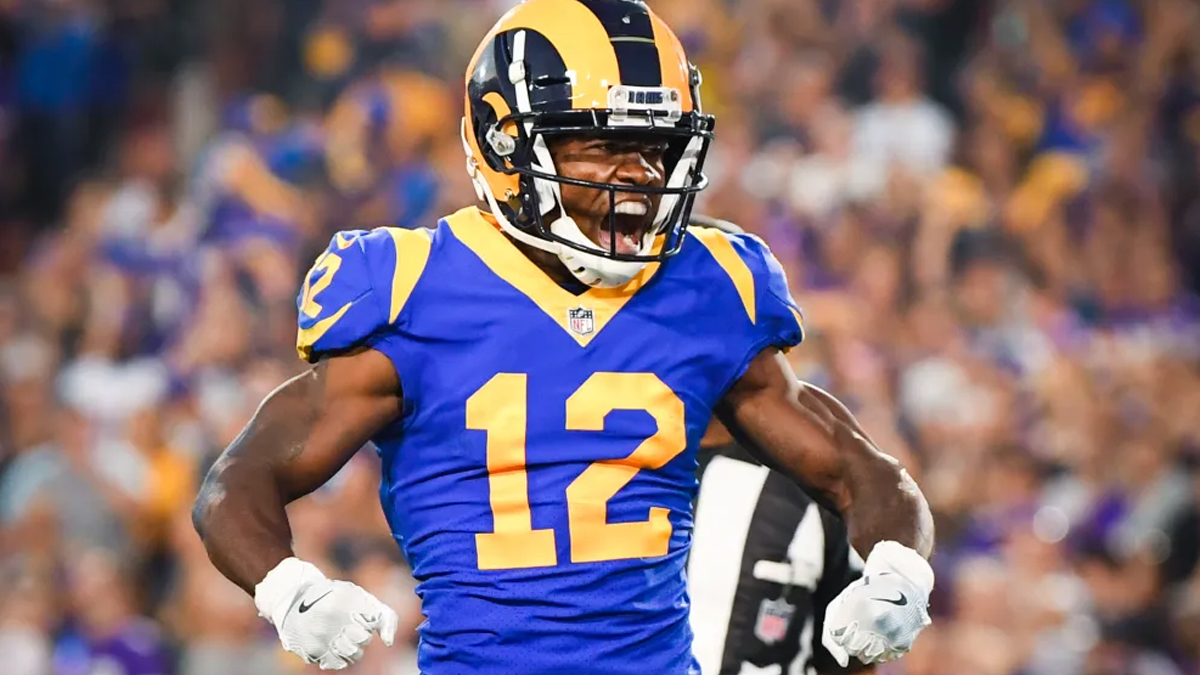
Breakdown of Brandin Cooks


The Los Angeles Rams boasted the number one offense in the NFL last year, thanks in part to the impactful play of Sammy Watkins. Utilizing speedo route concepts with max protection and play-action, Watkins’ ability to run deep routes was a cornerstone of their offensive strategy. One notable example is when Jared Goff connected with Watkins on a 67-yard touchdown pass, showcasing the effectiveness of this approach. Watkins’ speed allowed him to stretch defenses and create significant opportunities downfield.

The New England Patriots employed similar tactics with Brandin Cooks, who played a role akin to Watkins. In one instance, Cooks ran a deep over route while Chris Hogan ran a post, both benefiting from max protection off play-action. Tom Brady, recognizing the safeties squatting in the middle of the field, hit Cooks in the void for a touchdown. Cooks’ speed mirrored Watkins’, making him a vital component in executing these deep passing plays effectively. His ability to finish routes with speed was crucial for the Patriots’ offensive success.

As Brandin Cooks transitions to the Rams, he takes on the role previously held by Watkins. His speed will be a critical asset, not only for his own receptions but also for opening up the field for other receivers. Cooks’ presence will force defenses to account for his deep threat, thereby creating opportunities for teammates like Robert Woods. In the Rams’ offensive scheme, Cooks’ ability to run precise, deep routes will be essential in maintaining their status as the top offense. His integration into the Rams’ play-action and max protection schemes is anticipated to bring a similar, if not greater, impact than Watkins did last season.
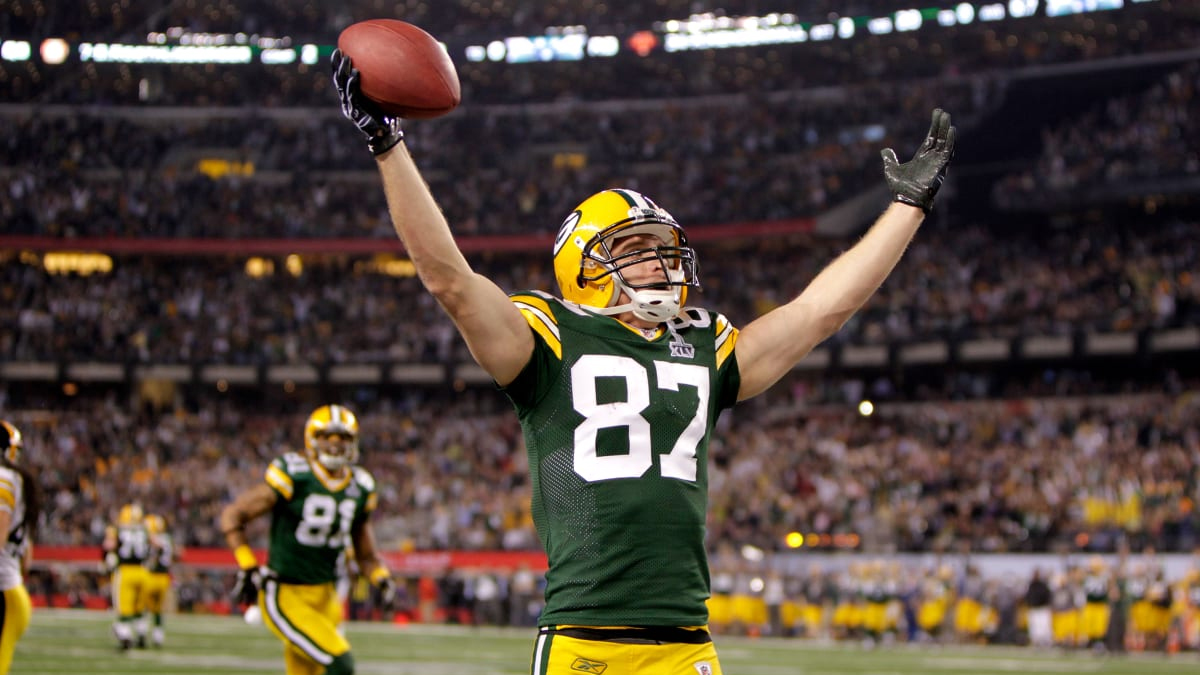
Breakdown of Jordy Nelson

Let’s be clear: Jordy Nelson can still play. In the first five weeks of the season, when Aaron Rodgers was healthy, Nelson scored six touchdowns. In Week 1 against Seattle, Green Bay lined up in a 2×2 set, aiming to get Nelson down the seam. Despite Seattle’s defense bracketing him with Bobby Wagner underneath and Earl Thomas over the top, Rodgers threw a perfect 32-yard touchdown pass to Nelson, demonstrating Nelson’s ability to get deep and make crucial plays.

Sometimes the quarterback makes the wide receivers, but other times, the receivers have to help out the quarterback. A prime example is when Green Bay faced Seattle. On a 2×2 set, Nelson was initially taken away by Wagner and Thomas. However, as Rodgers moved, Nelson had to shake Wagner and find an opening. He did just that, catching the ball right in front of the sticks for a nine-yard gain, showcasing his ability to adapt and help his quarterback under pressure.

Nelson’s ability to assist his quarterback was also evident on Christmas night with Derek Carr. In a critical third-and-nine situation, Carr was under pressure, and his primary targets were covered. However, unlike in Green Bay, where Nelson often helped Rodgers by getting open, this time, the receivers failed to assist Carr, forcing him to check down to Marshawn Lynch, resulting in a loss. The Raiders need to return to a style of football that utilizes Nelson’s skills effectively. With a new offensive coordinator, Greg Olson, coming from the Rams’ number one offense, there is hope that Nelson will play a pivotal role in revitalizing the Raiders’ offense.

In conclusion, Jordy Nelson remains a valuable asset on the field. His ability to get open, make crucial catches, and assist his quarterback in challenging situations highlights his importance to any team he plays for. For the Raiders to succeed, incorporating Nelson’s skills into their game plan will be essential.